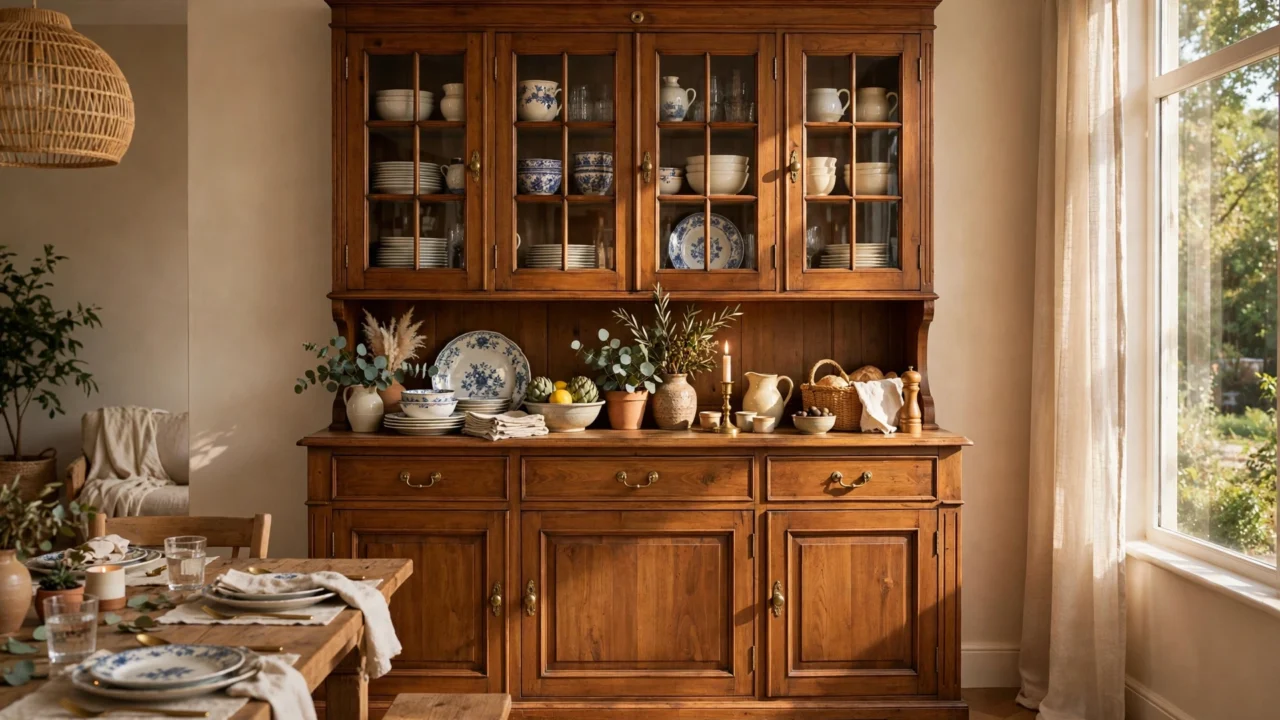
A hutch and buffet is one of the most useful pieces of furniture you can put in a dining room. In short: a buffet is a low, wide cabinet that stores dishes, linens and serving pieces, and a hutch is the taller cabinet with shelves and glass doors that sits on top of it. Together, they give you hidden storage, a serving surface and a display space in a single piece. If you are shopping for one, the best choice is the one that fits your wall, matches your dining table, and holds what you actually own. This guide walks through the types, styles, materials and sizes, so you can buy with confidence.
What Is a Hutch and Buffet?
A buffet, also called a sideboard, is a long, low cabinet, usually about waist-high, with doors, drawers or both. It holds the things you use at the table but do not want to leave out: extra plates, tablecloths, candles, serving dishes and cutlery. Its flat top doubles as a serving station when you host a meal.
A hutch is the upper section. It is narrower and taller, with open shelves, glass-fronted doors or a mix of the two, made to sit on top of a buffet. It is where display happens: glasses, crockery and vases are kept visible but protected. Many hutches and buffets are sold as a matching set, although they can also be bought separately.
How a Hutch Differs from a Buffet
The difference is mainly height and purpose. A buffet stores; a hutch displays. A buffet works on its own against any wall, while a hutch usually needs a buffet underneath it. If you only have room for one piece, start with the buffet, then add a hutch later if you want the display space.
Types and Styles of Hutches and Buffets
Hutches and buffets come in many styles. Start with the style of your table and chairs, then choose a piece that echoes it rather than copying it exactly.
Traditional
Traditional hutches and buffets have a formal look: raised panel doors, turned legs, crown moulding along the top and a rich, dark finish. They suit classic dining rooms and pair well with wood tables and upholstered chairs. Look for solid construction, such as dovetailed drawers.
Modern and Contemporary
Modern designs are simpler, with flat doors, clean lines, little ornament and finishes in white, grey, walnut or black. Handles are often slim, recessed or absent altogether. They work well in open-plan dining areas.
Farmhouse and Rustic
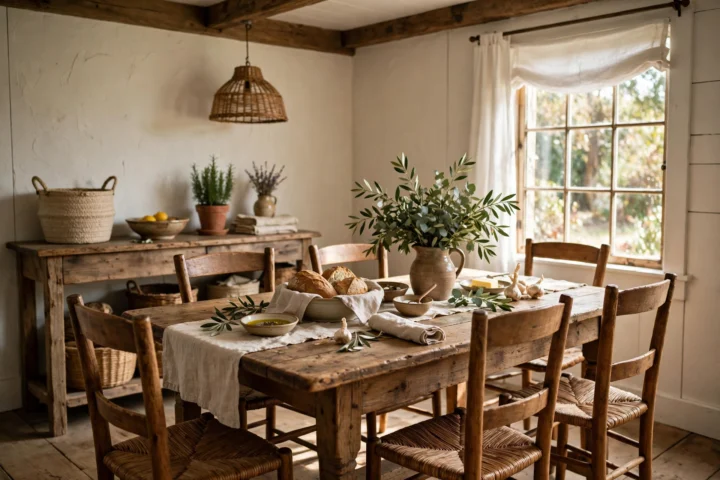
Farmhouse styles use distressed or whitewashed finishes, planked doors and black metal hardware. They feel relaxed and informal and go well with wooden tables, benches and woven textures. Small marks and wear tend to blend in, which suits a busy family dining room.
Mid-Century Modern
Mid-century pieces take their cues from the 1950s and 1960s: tapered legs, warm wood tones such as teak or walnut, sliding doors and simple geometric shapes. Raised legs keep the piece from looking heavy, which suits smaller dining rooms.
Materials: What to Look For
What a hutch and buffet is made of affects how it looks, how much it weighs, how it ages and how much care it needs. Each material trades off cost, durability and appearance.
Solid Wood
Solid wood, such as oak, maple, walnut or pine, is the most durable option and can be refinished if it is scratched. It has a natural grain that no printed finish copies well, and it ages gracefully. It is the heaviest and usually the most expensive choice, and it can expand or contract slightly with humidity changes.
Wood Veneer
Veneer is a thin layer of real wood bonded to a stable core. It gives you the look of solid wood at a lower cost and is less likely to warp, but it can chip at the edges and cannot be sanded and refinished as many times. Check the edges are finished neatly.
MDF and Engineered Wood
MDF, particleboard and other engineered woods are made from wood fibres pressed together with resin. They are affordable, smooth and stable, and they take paint well, which is why many white and grey finishes use them. They handle moisture and heavy loads less well than solid wood, so check shelf weight ratings and avoid damp rooms.
Glass and Metal Accents
Glass doors and metal handles can change the feel of a piece without changing its shape. Glass fronts make a hutch feel lighter and let you show off what is inside, while metal hardware in brass, black or brushed nickel can tie the piece to the other fixtures in the room. Glass needs regular cleaning, so check handles are fixed firmly.
Sizes and Measuring Your Space
Size is where most buying mistakes happen. A hutch and buffet that is too wide will crowd the room; one that is too small will look lost and hold too little. Measure before you shop, not after.
- Measure the wall where the piece will stand, including skirting boards and any radiators, sockets or light switches in the way.
- Leave room to walk around the table and pull chairs out without hitting the buffet.
- Check the height as well as the width: a tall hutch needs enough ceiling clearance, and the top shelf should still be reachable.
- Measure doorways, hallways and staircases too, so the piece can actually be delivered into the room.
- If the hutch sits on the buffet, check the widths match and the buffet is deep enough to support it.
As a starting point, the buffet should be roughly the same width as your dining table or slightly wider, so the two look balanced. In a narrow room, a slim-depth buffet saves floor space while still holding plates and linens.
Placement and Styling
Most hutches and buffets sit against the longest free wall in the dining room, where they are easy to reach from the table. If the room layout allows, placing the buffet on the wall opposite the main entrance makes it a natural focal point. Avoid blocking a walkway or placing it where an open door can swing into it.
Keep the top of the buffet simple: a lamp or candlesticks at one end, a small stack of books or a vase at the other, and empty space in between. Inside the hutch, group similar items, vary their heights, and leave some shelves partly empty so the display does not look crowded.
Care and Maintenance
A hutch and buffet is easy to look after if you keep up with a few simple habits.
- Dust the surfaces and glass regularly with a soft, dry cloth, and clean glass doors with a gentle glass cleaner.
- Use coasters, placemats or a runner to protect the top from hot dishes and water rings.
- Wipe up spills straight away, especially on wood and painted finishes.
- Keep it out of direct sunlight and away from radiators, since heat and sun can dry out or fade wood.
- Check screws and hinges now and then and tighten them if a door starts to sag or a handle loosens.
If you move the piece, lift it rather than dragging it, and empty the hutch shelves first so the top does not become top-heavy.
Frequently Asked Questions
What is the difference between a hutch and a buffet?
A buffet is the low, wide cabinet used for storage and serving, while a hutch is the taller, shelved section that sits on top of it for display. The two are often sold together, but each can also be used on its own.
Can I use a hutch without a buffet?
Yes, if it is designed to stand alone or be fixed to a wall, but most hutches are made to sit on a matching buffet. Check the instructions first, and make sure it is stable and, if needed, secured to the wall.
What size hutch and buffet do I need for my dining room?
Start with the width of your dining table and the length of your wall. The piece should be roughly as wide as the table, with space left on either side and enough room to walk past chairs. Measure the wall, doorways for delivery, and ceiling height if the hutch is tall.
How do I style a hutch and buffet?
Group a few display pieces on the shelves, vary their heights, and leave some empty space so the hutch does not look crowded. On top, a lamp, a vase or a small stack of books is enough, and a runner will protect the surface when you serve food.
A good hutch and buffet is a quiet workhorse: it hides the clutter, holds the serving dishes, and makes the dining room feel finished. Measure first, choose a style that fits your table, and pick a material you are happy to live with and look after.
Related reading: If you are still choosing the rest of the room, see our guide to farmhouse dining table and chairs.


1 Comment