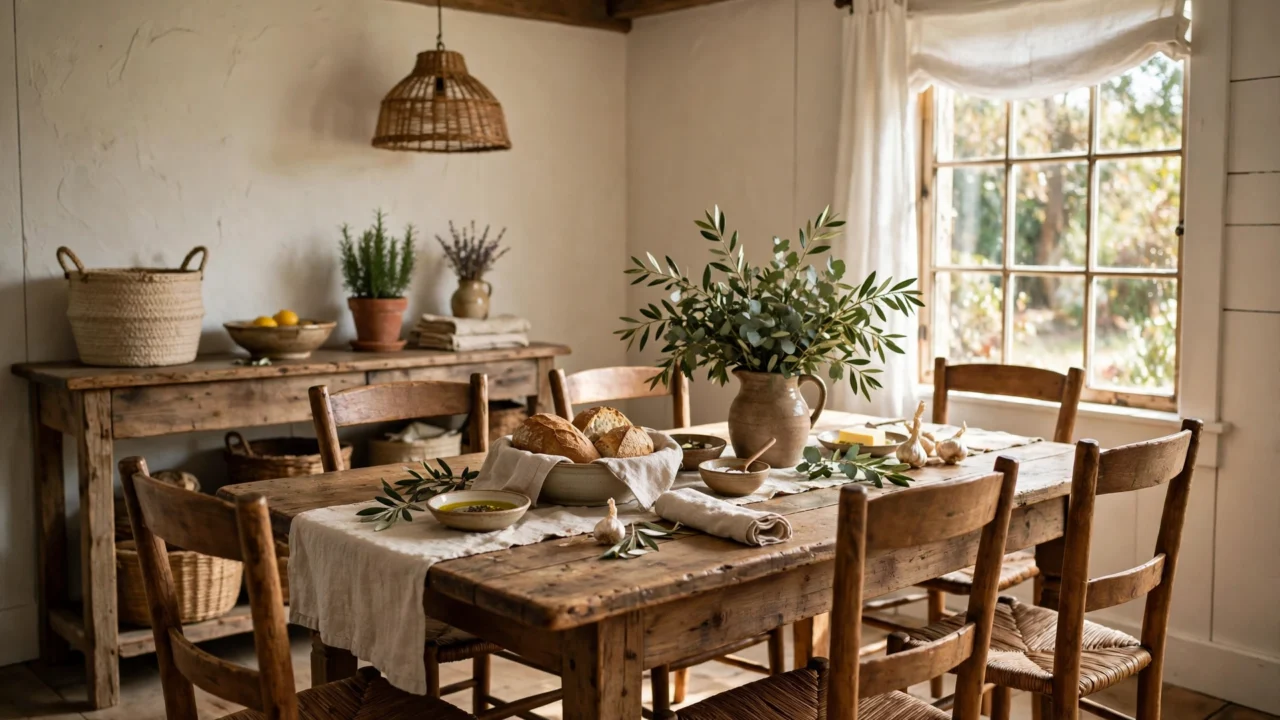
Bottom line up front: A good farmhouse dining table and chairs set is comfortable, sturdy, and sized for your room — not just pretty in a photograph. Measure first, choose a shape that suits how you eat and gather, sit in the chairs before you commit if you can, and pick a wood and finish you can clean easily. The rest of this guide walks through each decision in order.
Farmhouse dining furniture is popular because it feels warm and unpretentious. It suits family meals, homework, and long conversations just as well as a Sunday lunch. Yet the style covers a wide range, from chunky trestle tables with a bench to lighter, painted sets with spindle-back chairs. Knowing what to look for makes the difference between a set you love and one that always feels slightly wrong.
What Makes a Farmhouse Dining Set
A farmhouse dining table and chairs set usually shares a few clear traits. The table often has a thick wooden top, visible grain, and strong legs or a trestle base. The chairs tend to be simple and solid, with a straight or gently curved back, a wooden seat, and little decoration. Finishes are often natural wood, whitewashed, distressed, or painted in a soft neutral colour, and the overall feeling is relaxed rather than formal.
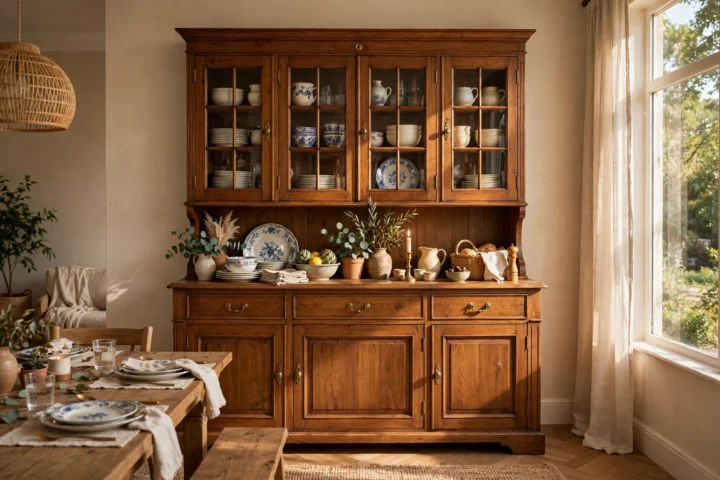
That relaxed look does not mean the furniture should be flimsy. Check the joints, the weight, and the way the table sits on the floor. A good table should not rock when you press a corner, and a chair should feel steady when you sit and shift your weight. Look underneath the tabletop for support rails, and check that chair legs are joined firmly. If you need extra storage in the same room, our hutch and buffet guide explains how a hutch and buffet can store dishes and keep the dining room tidy without crowding the table.
Table Shapes and Sizes
Shape and size are the most practical decisions, so make them before you fall in love with a particular finish. Start by measuring the room, not just the space where the table will stand. Leave enough room to pull chairs out and walk behind them, and check doorways and nearby furniture that could block a chair. If possible, mark the table outline on the floor with tape before you buy.
Rectangular Tables
Rectangular tables are the most common farmhouse choice. They seat more people along their length, fit well against a wall when space is tight, and work well with a bench on one side. Some have a leaf or extension for guests, so check how it works and where it is stored. The main drawback is that people at the ends can feel a little separate from the middle, especially on a very long table.
Round and Oval Tables
Round tables suit smaller rooms and square dining areas. Everyone can see each other, there are no sharp corners to bump into, and a round table can feel more sociable for everyday meals. The trade-off is that round tables usually seat fewer people for the same floor area, and a very large round table can make it hard to reach the centre. Oval tables are a useful middle ground, keeping the soft corners of a round table while seating more people.
Square Tables
Square tables work well in a small, square room or a kitchen-diner where a rectangular table would dominate. They are easy to place, suit four people well, and can be pushed against a wall when not in use. For larger households, however, a square table can feel cramped, and adding extra guests is harder than with a rectangular table.
Chair Styles and Comfort
Chairs decide how long people want to stay at the table, so do not treat them as an afterthought. Ladder-back chairs have horizontal slats and a simple, open back. Spindle-back chairs, sometimes called Windsor-style chairs, have thin turned spindles and a shaped seat. Shaker-style chairs are plain and straight, while cross-back chairs have an X-shaped back. Chairs with a padded seat add comfort for longer meals.
Comfort depends on more than style. Sit in the chair and check the seat height against the table: your legs should fit underneath, and your arms should rest naturally at table height. The seat should be wide enough to sit on without feeling pinched, and the back should support you without forcing you upright. If the set includes a bench, test it too. Benches save space and seat children easily, but they offer no back support, so they are better for shorter meals or for one side of the table.
Wood and Finishes
The wood and finish set the tone of the whole room. Solid wood is the most traditional farmhouse choice. Oak is hard and shows a clear grain, pine is lighter and often used for a softer, rustic look, and reclaimed wood can add character with knots and colour variation. Each type ages differently, so ask how the wood has been treated and whether it can be repaired if it is scratched.
Wood veneer and engineered wood are common alternatives. Veneer is a thin layer of real wood over a stable core, giving a consistent look, while engineered wood can be lighter and more affordable but harder to repair if damaged. Finishes matter too. Natural and oiled finishes show the grain and feel warm, but may need more care. Painted finishes in white, cream, grey, or sage can brighten a dark room, yet they can chip on edges that are knocked often. Distressed and whitewashed finishes suit the farmhouse look and make everyday wear less noticeable.
Matching vs Mixing
A matching set is the simplest choice. The table and chairs share the same wood, finish, and style, so the room looks settled from the start. This works well if you want a calm, coordinated dining room. The risk is that a fully matching set can feel a little formal or repetitive, especially in a small room.
Mixing chairs is a more relaxed farmhouse approach, and it can work very well if you keep one element consistent. For example, keep the same wood tone but vary the chair backs, or use the same chair style in two finishes, such as natural wood at the ends and painted chairs along the sides. A bench on one side and chairs on the other is another common mix. Repeat at least one colour, material, or shape so the set still feels intentional, and test the heights together: chairs from different sets can sit at different heights.
Care and Maintenance
Farmhouse tables are made to be used, and a little regular care will keep them looking good. Dust with a soft, dry cloth, and wipe up spills promptly, especially water, tea, coffee, and food that can stain. Use placemats, coasters, and a table runner for hot dishes, and avoid placing very hot items directly on the wood. For painted finishes, a damp cloth and a mild cleaner are usually enough; avoid harsh scrubbers that can wear the paint at the edges. Check the chairs and table from time to time, tighten any loose screws or bolts, and keep the set away from strong, direct sunlight and radiators, which can dry wood and affect joints over time.
Frequently Asked Questions
What size farmhouse dining table do I need?
Start with the number of people who will use it most days, then measure the room and leave space to pull chairs out and walk around the table. A table that seats your household comfortably, with room for an occasional guest, is usually a better choice than the largest table that will fit in the room.
Are farmhouse dining tables good for everyday use?
Yes, when they are well made and finished for regular use. Solid construction, a wipeable finish, and sturdy chairs matter more than the style name. Choose a finish you can clean easily and a size that suits daily meals, not just special occasions.
Should I choose a bench or chairs?
Chairs are more comfortable for longer meals because they offer back support, while a bench saves space and can seat more people along one side. Many households use chairs on one side and a bench on the other, or keep a bench for children and guests.
How do I keep a farmhouse table looking good?
Wipe up spills promptly, use mats and coasters for hot dishes, dust regularly, and tighten fixings when needed. Keep the table away from strong heat and direct sunlight, and follow the maker’s care guidance for its particular finish.
Choosing a farmhouse dining table and chairs is really about three questions: does it fit the room, is it comfortable to sit at, and can you look after it easily? Get those three right, and the style will take care of itself. Measure carefully, sit in the chairs, check the construction, and choose a finish that suits your household. The result should be a table that invites people to sit down, stay a while, and come back tomorrow.


1 Comment