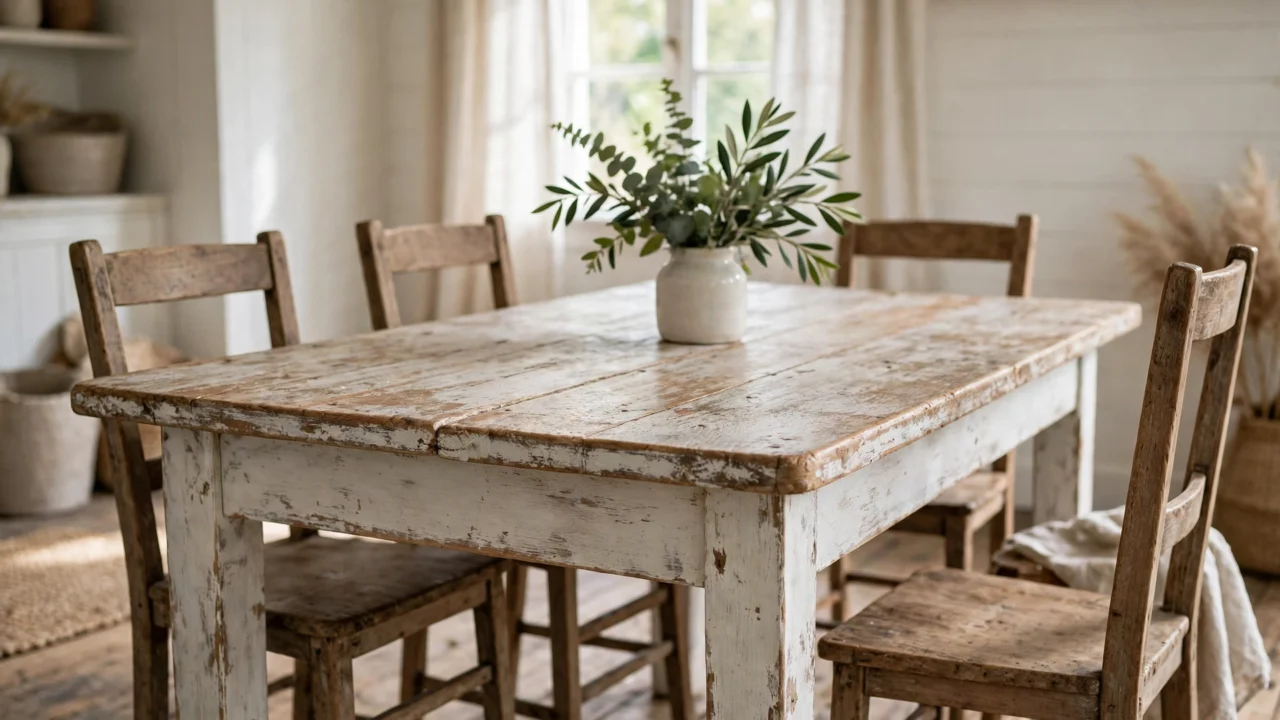
A distressed dining table is a table made to look older than it is. The wood is scraped, dented, sanded through paint or wire-brushed so the surface carries the marks of years of use — worn edges, soft colour variation, a grain you can feel under your hand. Done well, it brings warmth a perfectly smooth, factory-fresh table never manages. Done badly, it looks like a damaged table someone tried to disguise.
The difference is whether the marks look like they happened over time, in the places where a real table actually wears, and whether the table underneath is solid enough to last. This guide shows how to tell the difference before you buy.
What “Distressed” Actually Means
Distressing is a set of techniques, not a single look. A maker might hand-scrape the surface to leave shallow tool marks, brush the wood with wire to raise the grain, add small dents and wormhole-style marks, or paint the table and sand the paint back at the edges so the wood shows through. Some tables are made from genuinely reclaimed timber — old barn wood or floorboards given a second life — while most are new wood treated to look old.
The two age very differently. A reclaimed-wood table has marks that go all the way through the material, and its patina deepens with use. A new table with a distressed finish has marks only on the surface: a thin wax or oil finish lets the wood keep changing, while a thick lacquer coat freezes the look in place — protective, but it can make the distressing look painted on rather than lived in.
Neither is automatically better — but they are priced very differently, and a seller should be able to tell you which one you are looking at.
The 5 Distressing Styles, Compared
| Style | The look | Best for | Watch out for |
|---|---|---|---|
| Farmhouse | Chunky top, pale or natural wood, knots, saw marks, softly rounded edges | Most rooms; new marks blend into the finish | Check the wood quality, not just the look |
| Whitewashed | White or pale grey wash rubbed back so the grain shows through | Light rooms, coastal or Scandinavian schemes | Shows food stains; the top coat matters more here than anywhere else |
| Rustic dark | Deep brown or near-black stain over heavily textured wood | Rooms with darker furniture; hides stains well | Can make a small room feel heavier |
| Shabby chic | Chalky painted finish, sanded back at edges and corners | A soft, romantic look in photos | Paint chips with daily use; touch-ups are rarely invisible |
| Industrial | Distressed wood top on a blackened steel base | Modern rooms; the base is stable and easy to clean | Metal feet need protectors or they scratch hard floors |
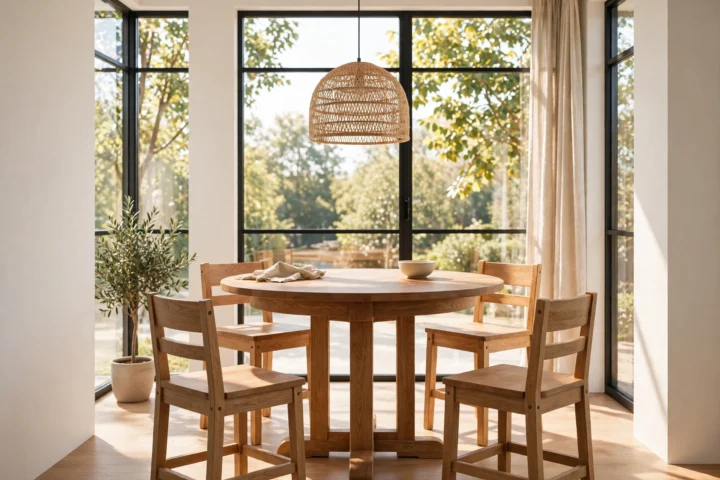
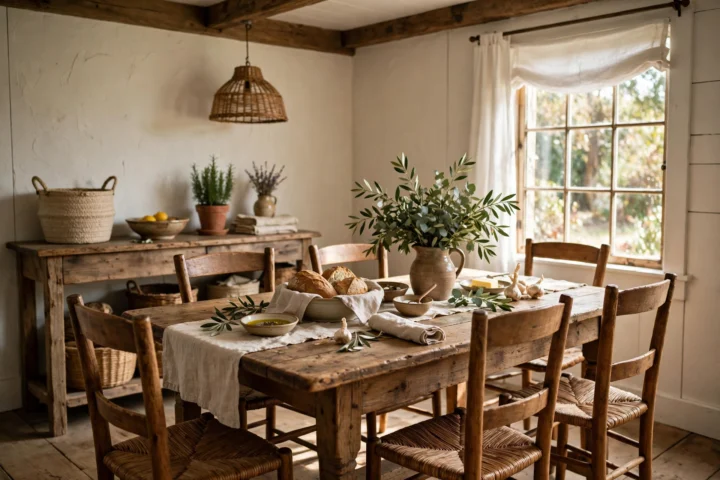
If you already have dining furniture in one of these styles, the new table should sit comfortably alongside it. A farmhouse dining table and chairs set in a natural wood tone, for instance, pairs easily with a distressed top in the same family — the two share the same relaxed, lived-in character, and a matching wood tone ties the room together without everything having to match exactly.
How to Spot Real Craftsmanship (and a Fake Aged Look)
The quickest test is to look at where the wear falls. On a real old table, wear concentrates where hands, plates and elbows actually land — the centre of the top, the edges where people pull out chairs, the corners that get knocked. A machine-distressed table has perfectly even marks repeated across the whole surface, dents at identical spacing. If the distressing looks stamped on, it probably was.
Run your hand across the top: genuine hand-scraping leaves shallow, uneven undulations you can feel, while an imitation feels flat and smooth. Look underneath, too — a solid wood top has consistent edge grain and real weight, while a veneer over particle board feels light, sounds hollow when tapped, and shows a thin edge layer.
Ask three questions before buying: what wood is it, how was it distressed, and what finish seals it? A seller who can answer is selling a real piece; a listing that says only “rustic distressed finish” and names no wood species is a warning sign. Check the joints too: mortise-and-tenon joints or solid bolts outlast staples and glue, and can be tightened years from now.
Distressed Dining Table Sizes: What Fits Your Room
Distressed tables often run big and chunky — wonderful in a showroom, crowded in a real dining room. Measure before you fall for the look.
A rectangular top around 72 inches long seats six comfortably; 60 inches seats four with room to serve. A 48-inch round seats four, a 60-inch round seats six. Allow about 24 inches of table width per person and at least 36 inches of clearance to the nearest wall or furniture, so chairs can be pulled out and people can walk past — 30 inches is the workable minimum in a tight room.
Then measure the delivery route: a thick solid-wood top is heavy, so check the narrowest doorway and stair turn on the way in, and whether the legs come off. A table that cannot get through the door is the most expensive kind of mistake.
Chairs deserve the same attention: mismatched chairs are part of the distressed look, but they still need to fit — a seat height around 18 inches for a standard 30-inch table, with about 12 inches between the seat and the underside of the tabletop. If you already own seating, compare it before buying: a set of saddle bar stools at counter height will not work with a standard-height distressed table.
Finishes: What Protects the Table and What Lets It Age
The finish decides how the table handles real life: hot plates, spilled drinks and the occasional knife scratch.
| Finish | Feel and ageing | Protection | Upkeep |
|---|---|---|---|
| Hardwax oil / natural oil | Matte, touchable; small marks can be sanded out and re-oiled locally | Moderate; less resistant to standing water and red wine | Re-oil about once a year |
| Polyurethane / lacquer | Hard, clear coat sealing the distressing under a protective skin | High; resists spills and heat well | Almost none — but scratches are hard to repair invisibly |
| Wax | Soft sheen and a warm feel; easy to reapply | Low; water rings appear quickly | Needs regular re-waxing for daily use |
| Painted / chalk paint | The shabby-chic look | Low; paint is a surface layer that chips | Daily-use chips look like damage, not character |
For daily meals, a hardwax oil or a matte polyurethane coat is the safest choice; for occasional dinners, oil or wax keeps the most authentic feel. Whatever the finish, ask the seller how to clean it and what to do about a scratch.
Styling It Without Overdoing the Rustic Look
A distressed dining table is a strong statement — do not fill the room with more distressed pieces. One companion is enough: a hutch and buffet in a warm wood finish anchors the room and gives the table a partner at standard height. Keep the rest simple — plain placemats, simple plates, a low centrepiece — and hang a warm pendant light at least 30 inches above the tabletop.
6 Mistakes Buyers Make
- Buying the pattern, not the table. Evenly repeated dents and identical marks are a machine pattern, not ageing. Look for variation.
- Ignoring the wood underneath. A distressed finish on particle board or thin veneer cannot be repaired — once the surface chips, the table is finished. Solid wood can be sanded and refinished.
- Choosing shabby-chic paint for daily meals. Painted finishes chip with everyday use, and the chips look like damage, not character.
- Skipping the tape measure. Distressed tables run big and heavy. Measure the room, the clearance and the delivery route.
- Forgetting the finish. A beautiful distressed top with the wrong finish stains on the first spill. Match the finish to how often the table is used.
- Over-matching the room. A distressed table, chairs, sideboard and frames together look staged. Let the table be the statement and keep the rest quiet.
Frequently Asked Questions
Are distressed dining tables durable? A solid wood distressed table is as durable as any solid wood table — often more forgiving, because new scratches blend into the existing wear. A veneer or particle-board table is not durable in the same way, because the surface cannot be refinished.
Do distressed dining tables show stains easily? It depends on the finish, not the distressing: a whitewashed or pale finish shows stains more than a dark one, and an oiled surface stains more readily than a polyurethane coat. Wipe spills promptly.
A Quick Decision Checklist
Before you order, run through this list: the distressing is uneven, where real wear happens; the table is solid wood, not veneer over particle board; the seller can name the wood, technique and finish; the top seats your household — 24 inches per person, 36 inches of clearance; the finish matches how often the table will be used; the delivery route fits the top; and the chairs sit at the right height. If all seven check out, the table will age gracefully instead of just looking old.
2 Comments