The short answer
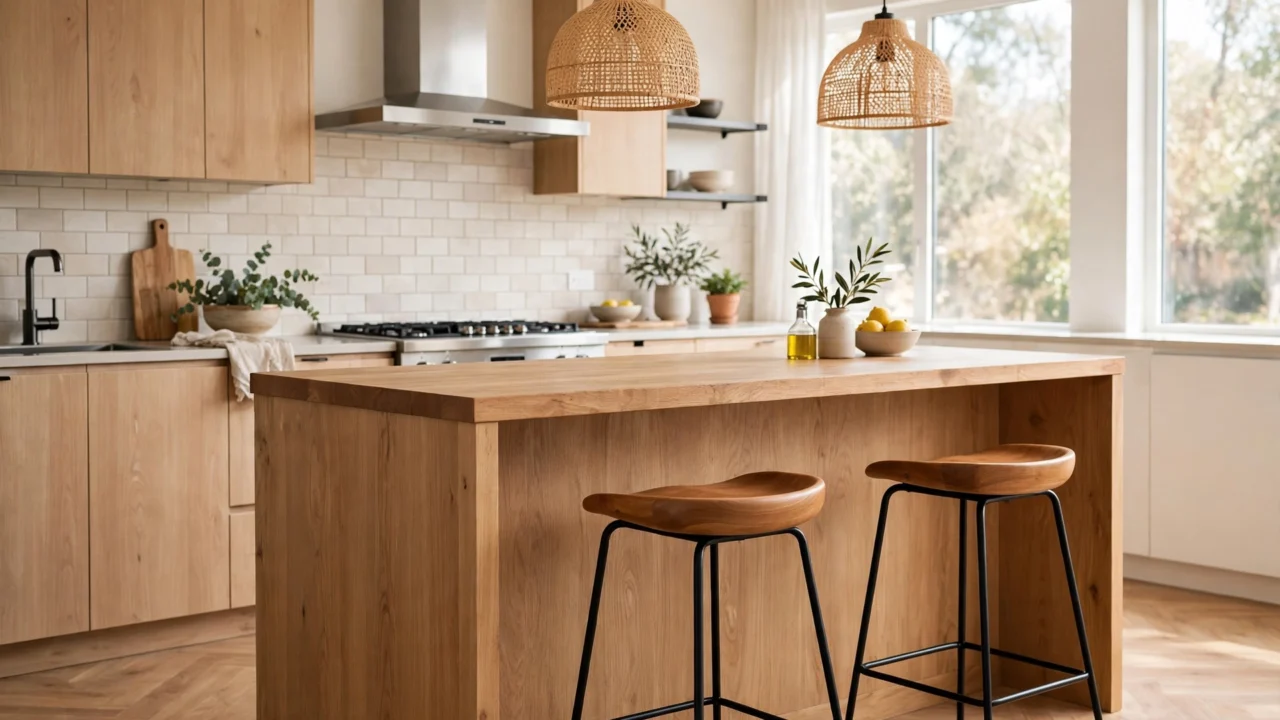
Saddle bar stools are the curved, backless seats modelled on a horse saddle, and they suit kitchens and home bars better than most other stool shapes because the scooped seat keeps you comfortable without a backrest getting in the way. Buy them in the right height first — a 24 to 26 inch seat for a standard 36 inch counter, or a 28 to 30 inch seat for a 42 inch bar — then choose the material and finish to match the room.
What makes a stool a “saddle” stool?
A saddle stool takes its shape from a riding saddle: a wide, gently scooped seat that dips in the middle and rises slightly at the front and back. There is no backrest, and usually no armrests either. A flat seat puts pressure on a small area; the saddle curve spreads your weight and holds you in a natural sitting position, which is why people can sit on one through a long breakfast without fidgeting.
Most saddle bar stools pair that carved or moulded seat with four legs, in metal for a modern look or turned wood for a traditional one. Some have a footrest ring or a stretcher bar between the legs, which matters more than it looks — without somewhere to rest your feet, your legs dangle and the seat stops feeling comfortable. The style is old, but it fits modern kitchens because the stools tuck fully under a counter overhang when not in use.
Get the height right first
Height is the one measurement you cannot fix after delivery, so measure before you shop. Measure from the floor to the underside of the countertop, then leave 10 to 12 inches between the seat and the underside, so your knees fit under the counter instead of pressing against it.
| Counter type | Counter height | Stool seat height |
|---|---|---|
| Standard kitchen counter | 36 inches | 24 to 26 inches |
| Raised bar or breakfast bar | 42 inches | 28 to 30 inches |
| Table-height surface | 30 inches | 18 inches |
Most saddle bar stools are sold as either counter stools (24 to 26 inches) or bar stools (28 to 30 inches), and the listing usually says which. If a listing only gives an overall height, that number includes the seat thickness and its curve, so it is not the seat height — ask the seller for the seat height. If you can try one in a shop, sit on it at a counter: your thighs should be roughly level and your feet should reach the footrest without stretching.
How wide should the seat be — and how many fit?
A typical saddle seat is 17 to 19 inches wide, which is generous compared with a round stool of the same footprint. Allow 26 to 30 inches of counter width per stool, measured centre to centre, so each person has elbow room and space to get on and off without bumping the next stool.
Measure your usable counter length — the stretch of overhang where knees actually fit, not the full length of the island — and divide by 26 inches to get your maximum. Two stools need roughly 52 to 60 inches; three need 78 to 90 inches. It is better to have two stools with room to breathe than three squeezed together. Also check the overhang depth: 12 to 15 inches gives knees proper room, while anything under 10 inches leaves even the right stool feeling cramped.
Wood, metal or upholstered? Choosing the seat material
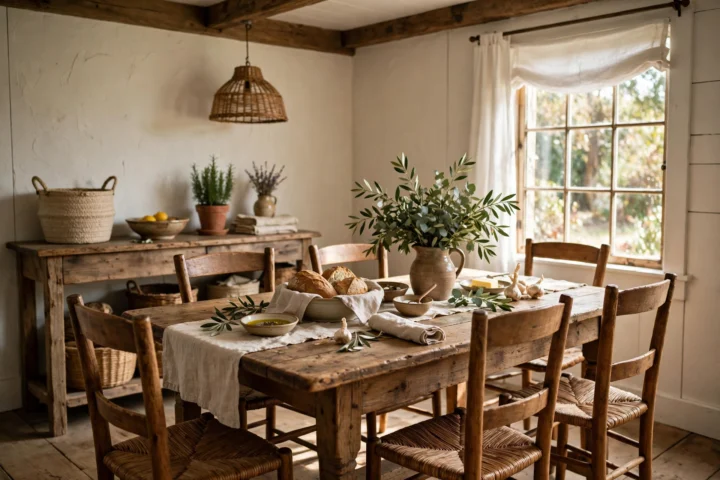
Solid wood is the classic saddle seat. Oak, walnut, ash and acacia are common: oak is hard and shows wear slowly, walnut darkens and looks richer over time, and lighter woods show spills sooner. A solid-wood seat wipes clean with a damp cloth, and a scratched seat can usually be sanded and re-oiled. Wood suits kitchens that already have timber in them — if your dining area leans farmhouse, our guide to farmhouse dining tables and chairs covers how to match table and seating finishes so the two areas feel like one room.
Metal seats — usually steel or aluminium with a saddle-shaped pressed seat — are the toughest option and the easiest to clean, which is why they turn up in busy family kitchens. The trade-off is comfort: a bare metal seat is hard and cold, and it shows fingerprints. A thin pad solves the comfort problem and can be removed for cleaning.
Upholstered or leather seats shaped into a saddle curve are the most comfortable of all. The catch is maintenance: fabric absorbs cooking grease and spills, while leather handles them better but needs conditioning to stop it drying and cracking near a hob. If the stools sit close to the cooker, a wipeable seat will save you far more trouble than a beautiful fabric one.
Legs matter too. Solid wood legs look warm and traditional but can wobble if the joints loosen, so check that the legs are joined with stretchers, not just screwed into the seat. Metal legs, usually black, brass or chrome, stay rigid and suit modern kitchens, but they can scratch hard floors — look for protective glides on the feet, or add felt pads yourself.
Back, no back, or low back?
A true saddle stool has no back, and for most kitchens that is the right call — it keeps the sightline open across an island and lets the stool slide fully underneath. But if the stools are where people eat full meals or sit for an hour or more, a low backrest that rises only a few inches above the seat gives real support without blocking the view. Full-height backs belong at a dining table, not at a kitchen counter. Skip armrests too: they make the stool wider and stop it sliding under the counter.
Swivel, footrests and other details worth paying for
A swivel seat is the one extra feature that genuinely improves a saddle stool. It lets you turn to face the room without dragging the stool across the floor, and it makes getting on and off easier in a tight space. Look for a smooth, quiet swivel — a stiff or grinding one is worse than none at all.
The footrest deserves the same attention. A full ring footrest gives your feet somewhere to rest whatever way you sit; a single bar between the front legs only helps if you sit facing forward. On a 24 inch counter stool the footrest should sit around 7 to 9 inches off the floor. If the stool has no footrest at all, your legs will tire quickly. Weight capacity is worth checking too: most saddle bar stools are rated for 250 to 300 pounds, but cheaper models can be less.
Matching saddle stools to your kitchen style
Saddle stools are unusually flexible: the same seat shape works in a farmhouse kitchen, a modern flat and a traditional dining room, and the finish does most of the work. Dark walnut seats with black metal legs suit modern and industrial kitchens; light oak or ash with turned wood legs suits farmhouse and Scandinavian rooms.
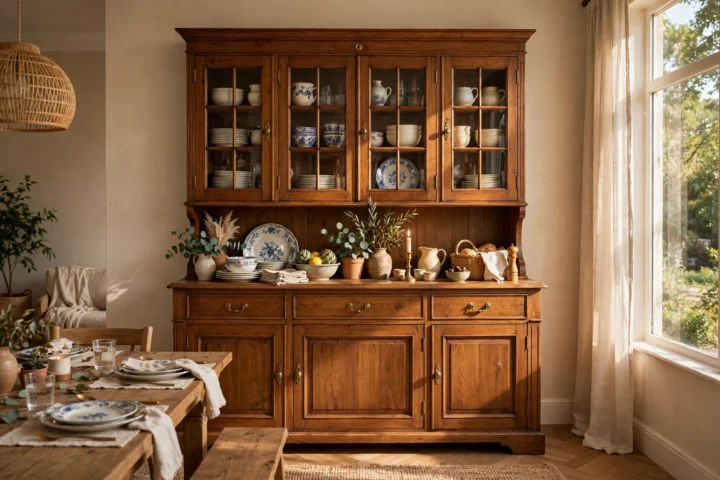
Match the stool finish to something already in the room rather than introducing a brand-new wood tone. If your dining furniture is a warm oak, a walnut stool will clash; if your kitchen has black hardware, black metal legs tie the stools in. The same rule applies across the room: a hutch and buffet in the same wood tone as your stools makes a dining area feel planned. Saddle stools also work at an outdoor bar, but only in weather-proof materials such as powder-coated metal or teak — see our ideas to improve your outdoor living space for layouts that work with bar-height counters.
Five mistakes to avoid when buying saddle bar stools
1. Guessing the height. Measure the counter, subtract 10 to 12 inches, and buy the seat height that matches. A stool two inches too tall is unusable.
2. Buying too many. Three stools crammed into space for two means nobody sits comfortably. Count the usable overhang, not the island length.
3. Ignoring the footrest. A stool without a footrest, or with one at the wrong height, will sit unused no matter how good it looks.
4. Choosing fabric for a cooking zone. Stools beside a hob collect grease and splashes. Wipeable seats belong near cooking.
5. Forgetting the floor. Metal legs on hard floors scratch. Felt pads cost very little and save the floor.
Caring for your stools so they last
Wooden saddle seats need little care: a wipe with a damp cloth, dried straight after, and an occasional re-oiling if the finish looks dull. Keep them out of standing water, and tighten the leg joints once a year — a stool that starts to wobble is usually a loose bolt, not a broken stool. Metal frames need only a wipe-down, but check the foot glides now and then. Leather seats should be wiped clean and conditioned a couple of times a year.
Frequently asked questions
Are saddle bar stools comfortable without a back?
Yes, for the way most people use them — meals, coffee and conversation at a counter. The scooped seat supports you better than a flat seat.
What height saddle stool do I need for a kitchen island?
For a standard 36 inch counter, a 24 to 26 inch seat. For a 42 inch raised bar, a 28 to 30 inch seat.
How many saddle stools fit on a kitchen island?
Allow 26 to 30 inches of counter width per stool. A 60 inch stretch of usable overhang fits two stools; you need around 78 to 90 inches for three.
Choose the height first, the seat material second and the finish last, and a saddle bar stool will give you a comfortable seat that disappears under the counter when the meal is over.

2 Comments