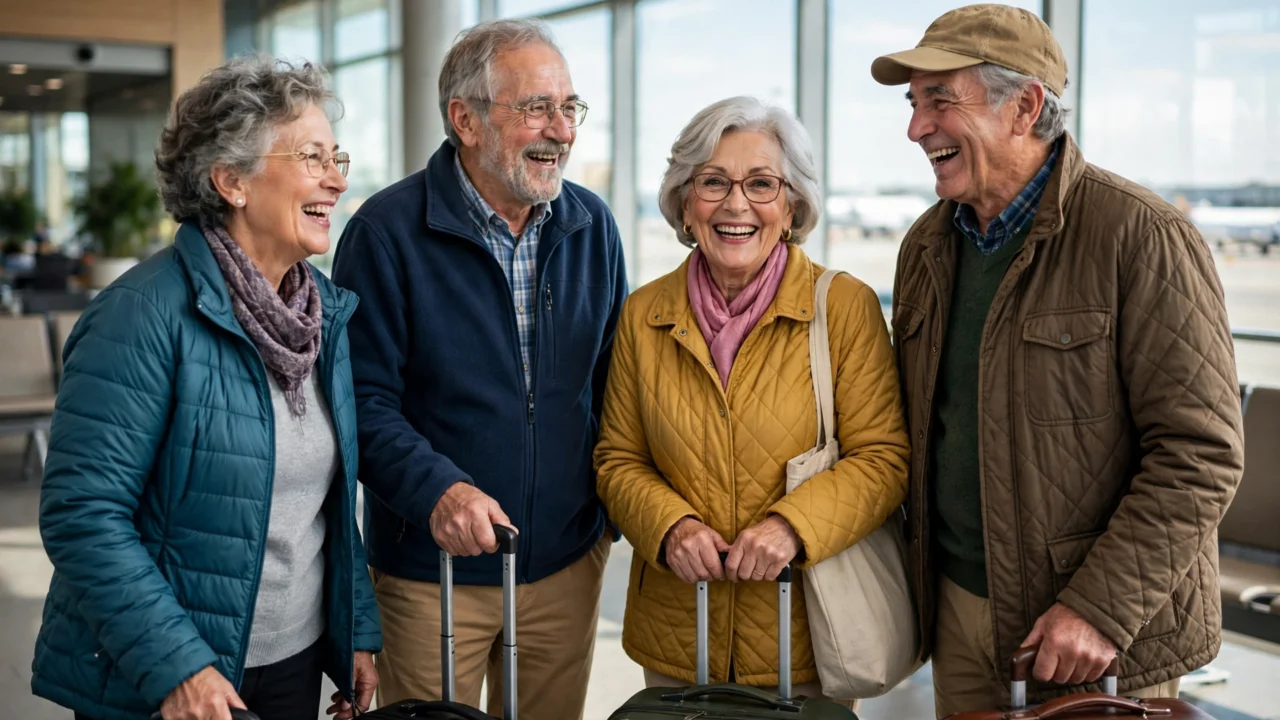
Short answer: The best travel tips for senior citizens come down to this: plan at a slower pace, sort out your health and medication before you leave, pack light, choose comfortable transport, keep your money and documents secure, and carry travel insurance that fits your trip. With those basics in place, travel in later life can be relaxed, enjoyable, and far less tiring.
Travel does not have to stop as you get older. Many senior citizens travel to visit family, explore new places, or revisit favourite destinations. The difference is rarely the destination itself. It is the preparation, rest, and flexibility built into the trip.
Plan and Book Smart
Good trips usually start long before departure. Choose a destination and a style of travel that suit your energy and interests, rather than trying to fit everything into one visit. A place with good pavements, reliable public transport, and places to sit and rest can make a real difference on a sightseeing day.
For a slower-paced island holiday, consider the Virgin Islands.
Build rest into the itinerary from the start. Plan one main activity a day, rather than three or four, and leave gaps between outings. Staying in one place for several nights is often more restful than moving hotels every day, and a central base can save a lot of walking back and forth.
When you book, allow plenty of time between connections, and choose daytime arrivals where you can. Check your accommodation before you book: is there a lift, or will you need to climb stairs? Is the entrance step-free? Share your itinerary and accommodation details with someone at home, and keep your confirmations in one place, on paper as well as on your phone.
Health and Medication Prep
Health preparation is one of the most important parts of travelling as a senior citizen, and it is best done early. If you have a health condition or take regular medication, talk to your doctor well before the trip. Ask whether the journey, the climate, or the activities you have planned raise anything you should prepare for.
Make a simple health summary to carry with you, listing your conditions, allergies, the name and dose of each medication, and an emergency contact. Keep a copy with you, and leave another with a travelling companion or a family member at home. Before an international trip, check the CDC Travelers’ Health pages for destination health information.
Carry medication in your hand luggage, not in a checked bag, and keep it in its original packaging. Take enough for the whole trip, plus a few extra days in case of delays. On the journey, drink water regularly, eat at normal times where you can, and get up and move around when it is safe to do so. Rest when you need to, rather than pushing through tiredness.
Pack Light and Right
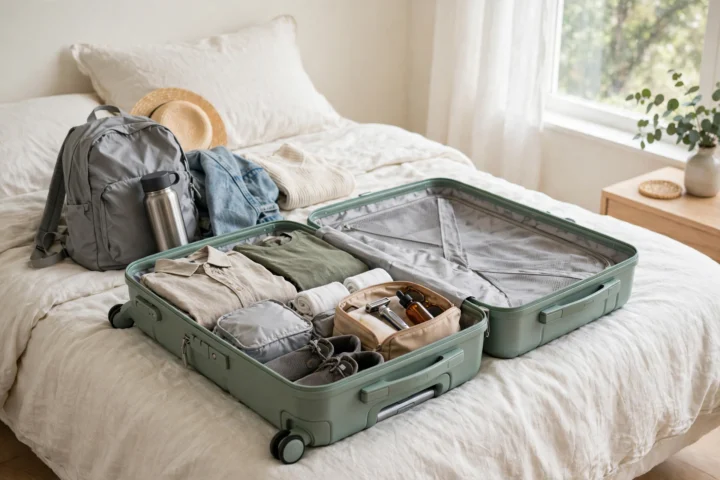
Packing light makes almost every part of a trip easier. A bag you can lift, wheel, and manage yourself gives you more freedom than a heavy suitcase, and it is much easier to handle on stairs, in a taxi, or on a train. Choose a rolling case with smooth wheels and a comfortable handle, and test it at home before you travel.
For help choosing a bag, see our guide to the lightest luggage.
Start with a short list, and pack around it. Comfortable, well-worn shoes are worth more than a new pair that might rub. Pack layers rather than one heavy coat, so you can adjust to changing weather, and include a light waterproof layer if rain is possible. Clothes that are comfortable to sit in for hours will serve you better on a long journey than clothes that only look good.
Keep the essentials in a small day bag that stays with you: medication, documents, phone and charger, a bottle of water, a snack, and reading glasses. That way, if your main bag is delayed, you still have what matters most. Leave a little space in your bag for the return journey too, as souvenirs and gifts have a way of appearing.
Comfortable Transport
Long journeys are much easier when you choose comfort over speed. On a flight or a long train ride, look for a seat that gives you room to stretch, and stand up and walk around when it is safe and allowed. Gentle movement and changing position can help you arrive feeling far less stiff.
Allow extra time at airports and stations. Arriving early takes away the stress of rushing, gives you time to find your gate or platform, and leaves room for a rest before you board. If walking long distances is difficult, or you need help with luggage, contact the airline, railway, or station in advance and ask what assistance is available.
For road trips, plan regular breaks to stretch, use the facilities, and have a drink. If you are driving, share the driving where possible, and avoid long drives at night if you find them tiring. A shorter driving day, with an overnight stop, is often better than pushing on. Keep water, a snack, and any medication you need during the journey within easy reach.
Staying Safe and Travel Insurance
Staying safe while travelling is mostly about awareness and preparation. Before you go, learn a little about your destination: which areas are best to stay in, how to get around, and how to contact local emergency services. For international travel, the U.S. Department of State’s international travel guidance is a useful starting point, and your own government’s travel advice is worth checking too.
Keep valuables out of sight, and carry only what you need for the day. A bag that closes securely and can be worn across the body is harder to snatch than an open tote. Use the safe in your room for passports and spare cash, and keep a note of important numbers, such as your bank’s phone number, in a separate place from your cards. If a place, a route, or an offer feels wrong, step away and find a busier, well-lit area.
Travel insurance is also worth thinking about before you book. Read the policy carefully, and check what it covers for medical care, trip cancellation, and lost luggage. Be honest with the insurer about your health, and ask questions about anything you do not understand. The right policy is the one that fits your trip, your health, and your destination. Keep the policy number and the insurer’s emergency phone number with your travel documents.
Money and Documents
Keeping your money and documents in order removes a lot of worry from a trip. Before you travel, check that your passport is valid for your trip, and check whether you need a visa or any other entry document for your destination. Use official government sources for this, and allow plenty of time to apply for anything you need.
Make copies of your passport, travel insurance, bookings, and emergency contacts. Keep one set with you, separate from the originals, and leave another set at home with someone you trust. It can also help to keep secure digital copies, so you can reach them if the paper copies are lost.
For money, a mix of payment methods usually works best. Carry a bank card and a small amount of cash, and keep them in different places, so losing one does not leave you with nothing. Let your bank know you will be travelling if it offers that option, and keep the bank’s phone number handy in case a card is lost. Keep a small card in your wallet with your name, an emergency contact, any important medical information, and the address of your accommodation.
Frequently Asked Questions
Is it safe for senior citizens to travel alone?
Many senior citizens travel alone and enjoy it. The key is preparation: choose a destination you feel comfortable with, plan a realistic pace, share your itinerary with someone at home, and keep in touch regularly. Well-reviewed accommodation in a central area and reliable transport can also help you feel more confident.
How far in advance should senior citizens plan a trip?
Start planning as early as you comfortably can, especially for international travel. That gives you time to talk to your doctor, check passports and visas, compare travel insurance, and book accommodation and transport that suit your needs, without rushing the decisions.
What should senior citizens pack for a flight?
Pack medication, travel documents, a phone charger, water, a snack, layers for changing temperatures, and anything you need to stay comfortable, such as reading glasses or a neck cushion, in your hand luggage. Keep your main bag light, and wear comfortable shoes for the airport.
Do senior citizens need travel insurance?
Travel insurance is worth considering for most trips, and it is especially important for international travel, where medical care can be expensive and your usual health cover may not apply. Compare policies, read what is covered, and ask the insurer about anything that is unclear before you buy.



1 Comment