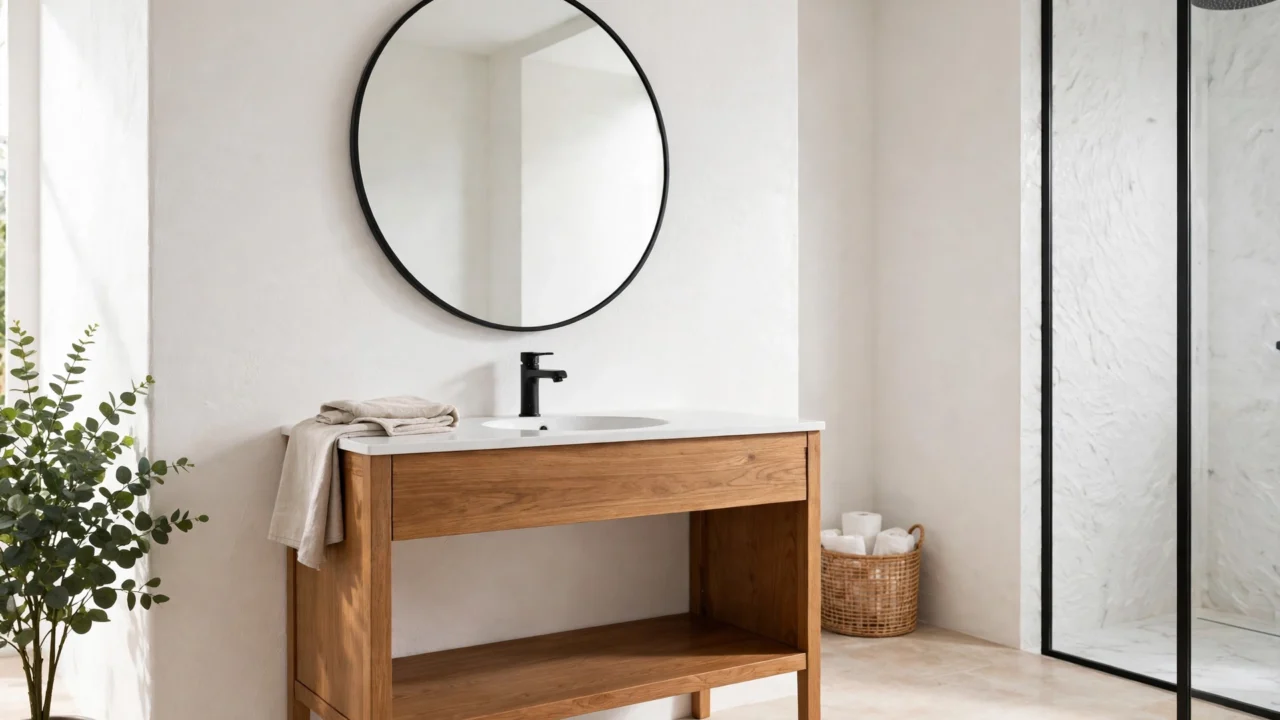
Bottom line up front: A good free standing bathroom sink vanity is one that fits your bathroom, suits the way you use the sink, and leaves enough room to move. Measure the space and the plumbing first, choose a size that leaves clear space in front and beside the vanity, and pick a material and finish that can cope with water, steam, and daily cleaning. The rest of this guide works through each choice in order.
A bathroom vanity is more than a place to wash your hands. It holds the basin, hides the plumbing, stores everyday items, and sets the look of the room. A free-standing vanity does all of that while standing on its own legs or base, rather than being fixed to the wall. That makes it a flexible choice for many bathrooms, from a small cloakroom to a larger family bathroom.
What a Free-Standing Vanity Is
A free standing bathroom sink vanity is a self-supporting unit that combines a sink or basin with a cabinet or stand underneath. It rests on the floor, usually on legs or a plinth, and it is not hung from the wall. Some models have a basin set into the top, some have a vessel basin sitting on top, and some have a basin built into the worktop itself. The cabinet below may have doors, drawers, open shelves, or a mix of all three.
Because it stands on the floor, a free-standing vanity can feel more solid and traditional than a wall-hung unit, and it often provides more storage. It also suits bathrooms where the wall cannot easily support a heavy, wall-hung cabinet. The trade-off is that it takes up floor space and can make a small bathroom feel more crowded, so think about how it will be used every day, not just how it looks in a photograph.
Sizes and Measuring
Size is the most practical decision, so measure before you choose a style. Start with the width of the wall or alcove where the vanity will stand, then measure the depth from the wall to the front of the room. Leave clear space in front of the vanity so you can stand comfortably, open doors and drawers, and move around the room. Check the position of the door, the toilet, the bath or shower, and any radiators that could block the vanity.
Next, check the plumbing. Note where the water supply pipes and the waste pipe come out of the wall or floor, and whether they are centred or offset. A vanity that is too wide or too deep can cover a pipe in the wrong place, while a vanity with drawers may need more clearance for the waste trap underneath. Measure the height you want as well, and if possible, mark the outline on the floor with tape and stand in front of it, as if you were washing your hands, before you buy.
Single vs Double Sink
A single-sink vanity suits most households. It is simpler to install, uses less worktop space, and leaves more room for storage or for a larger mirror. It also works well in a bathroom that is used by one person at a time, which is true of many family bathrooms, even if several people share the house.
A double-sink vanity suits a shared bathroom where two people often use the sink at the same time, such as a couple getting ready together. It needs a wider unit, two sets of taps and wastes, and enough plumbing to supply both sinks. Before you choose a double sink, check that the bathroom is wide enough for two people to stand side by side comfortably, and that the extra width will not crowd the toilet, bath, or door.
Materials and Finishes
Bathroom materials need to cope with water, steam, and frequent cleaning. Solid wood can look warm and natural, but it needs a good seal and regular care in a damp room. Plywood and moisture-resistant board are common for vanity cabinets because they are stable and can be finished in many colours. Stone and quartz worktops are hard-wearing and easy to wipe, while ceramic and porcelain basins are simple to clean and suit most styles.
Finishes affect both the look and the upkeep. A painted finish in white, grey, or a soft colour can brighten a small bathroom, while a wood finish can add warmth. Matte finishes can hide water marks, while gloss finishes can be wiped clean easily but may show marks more clearly. Check the edges and the area around the basin, where water collects first: a well-sealed top will be much easier to keep clean than a unit with gaps where water can sit.
Storage
Storage is often the reason for choosing a vanity, so plan it around what you actually keep in the bathroom. Everyday items such as toothbrushes, soap, and medicines need to be easy to reach, while cleaning products, spare towels, and less-used items can sit lower down. Drawers are useful for small items because you can see what is inside, while cupboards suit taller bottles. Check the inside of the cabinet before you buy: the waste trap and pipes take up space in the middle, so a drawer may be shallower than it looks, and doors and drawers should open fully without hitting the toilet or bath.
Installation Basics
Installing a free-standing vanity is usually simpler than installing a wall-hung unit, because the floor carries the weight. Even so, the plumbing needs to be in the right place. Before installation, confirm the position of the water supply and waste pipes, and check that the vanity’s basin, taps, and waste fit those connections. If the pipes need to move, that work should be planned before the vanity arrives, not discovered on the day.
Level the vanity carefully, especially on a tiled floor that may not be perfectly flat. A vanity that is not level can make doors and drawers stick, and it can leave gaps where water collects. Seal the joint between the vanity top and the wall with a suitable bathroom sealant, and check for leaks after the taps and waste are connected. If you are planning a wider bathroom update, our bathroom renovation DIY guide covers quick improvements you can make yourself alongside a vanity change. If plumbing needs to move or the work is beyond a simple swap, our guide to hiring the right contractor for your renovations explains how to choose someone suitable for the job.
Care
Regular care will keep a vanity looking good and working well. Wipe up water around the basin and taps after use, and clean the worktop and cabinet with a damp cloth and a mild bathroom cleaner. Avoid harsh scrubbers and strong chemicals that can damage the finish or the sealant. Check the sealant around the basin and the wall from time to time, and replace it if it cracks, so water cannot get behind the unit. Keep the inside of the cabinet dry, wipe up any leaks promptly, and tighten hinges and fixings when needed.
Frequently Asked Questions
What size free standing bathroom sink vanity do I need?
Measure the wall, the depth, and the plumbing, and leave clear space in front of the vanity and around other fittings. Choose a size that fits the room and the people who use it, rather than the largest unit that will fit.
Is a free-standing vanity better than a wall-hung vanity?
It depends on the bathroom. A free-standing vanity often offers more storage and feels more solid, while a wall-hung vanity can make a small bathroom feel larger and is easier to clean underneath.
Can I replace a vanity without moving the plumbing?
Often, yes, if the new vanity fits the existing pipe positions and the basin and waste line up. If the pipes are in a different place, or the new vanity is much wider or deeper, the plumbing may need to be moved.
How do I keep a bathroom vanity in good condition?
Wipe up water promptly, clean with a mild cleaner, check the sealant around the basin and wall, and keep the cabinet dry inside. Tighten hinges and fixings when needed, and deal with leaks as soon as you notice them.
Choosing a free standing bathroom sink vanity is really about three questions: does it fit the room and the plumbing, does it suit the way you use the bathroom, and can you look after it easily? Get those three right, and the style will follow. Measure carefully, check the storage and the pipes, and choose a material and finish that can cope with water and daily use.


1 Comment